
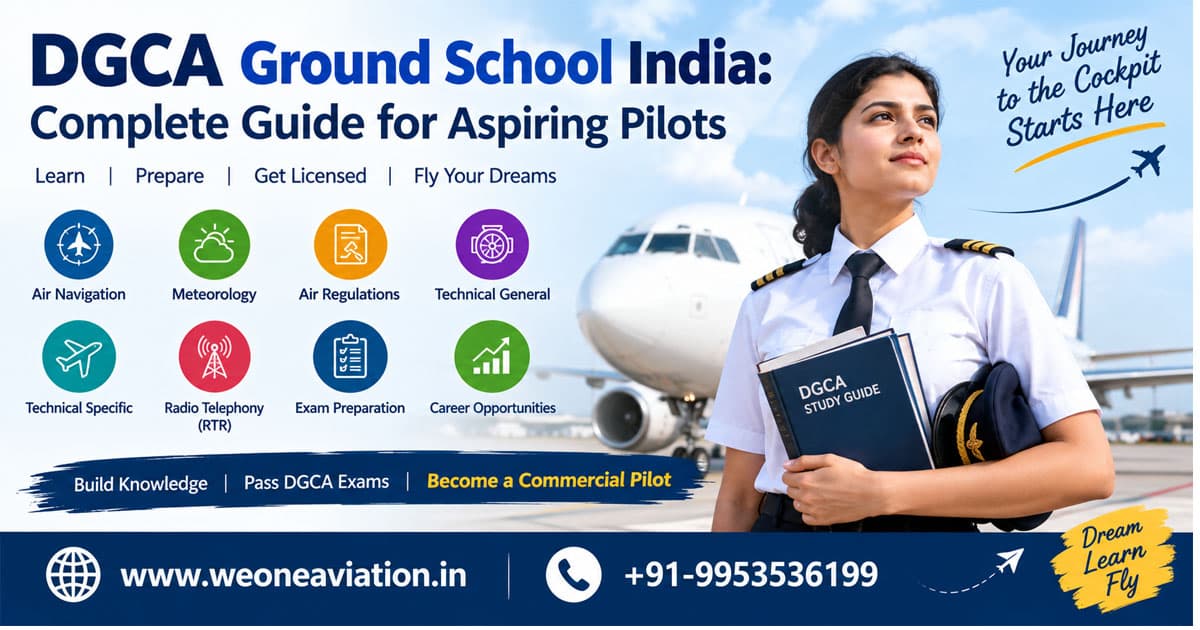
DGCA Ground School India: Complete Guide for Aspiring Pilots
Introduction
If you dream of becoming a commercial pilot in India, enrolling in a DGCA Ground School is one of the most important steps in your aviation journey. Ground school provides the theoretical knowledge required to pass the examinations conducted by the Directorate General of Civil Aviation (DGCA) and prepares aspiring pilots for safe and professional flying.
While flight training teaches practical flying skills, ground school builds the technical foundation needed to understand aircraft systems, aviation regulations, navigation, meteorology, and operational procedures. Without strong theoretical knowledge, becoming a successful commercial pilot is difficult.
In this comprehensive guide, we'll explain everything you need to know about DGCA Ground School in India, including subjects, eligibility, benefits, career opportunities, and preparation tips.
What is DGCA Ground School?
DGCA Ground School is a structured classroom or online training program that prepares student pilots for the theoretical examinations required for obtaining a Commercial Pilot Licence (CPL), Airline Transport Pilot Licence (ATPL), or other pilot licences approved by the DGCA.
Ground school helps students understand aviation concepts before applying them during flight training.
The program focuses on building knowledge in:
- Aviation regulations
- Aircraft systems
- Navigation
- Meteorology
- Flight planning
- Radio communication
- Aviation safety
- Human performance
Why is DGCA Ground School Important?
Ground school plays a vital role in pilot training because it helps students:
- Pass DGCA examinations
- Understand aircraft operations
- Improve flight safety awareness
- Learn aviation terminology
- Develop decision-making skills
- Prepare for airline interviews
- Build confidence before flight training
A strong theoretical foundation also improves performance during practical flight lessons.
DGCA Ground School Subjects
Students preparing for CPL or ATPL generally study several core subjects.
1. Air Navigation
Air Navigation teaches pilots how to plan and conduct flights safely.
Topics include:
- Maps and charts
- Latitude and longitude
- Navigation systems
- Flight planning
- Fuel calculations
- Wind correction
- Dead reckoning
- Radio navigation
Navigation is one of the most important subjects in pilot training.
2. Aviation Meteorology
Weather significantly affects flight operations.
Students learn about:
- Atmospheric structure
- Clouds
- Winds
- Pressure systems
- Thunderstorms
- Turbulence
- Fog
- Weather charts
- METAR and TAF reports
Understanding weather helps pilots make informed operational decisions.
3. Air Regulations
This subject covers aviation laws and international regulations.
Topics include:
- DGCA regulations
- ICAO standards
- Rules of the air
- Licensing requirements
- Flight operations
- Airspace classifications
- Aviation safety procedures
Knowledge of regulations is essential for legal and safe flying.
4. Technical General
Technical General explains how aircraft function.
Students study:
- Aircraft structures
- Engines
- Electrical systems
- Fuel systems
- Hydraulic systems
- Flight instruments
- Landing gear
- Aircraft performance
This subject helps pilots understand aircraft operations and system limitations.
5. Technical Specific
Technical Specific focuses on the aircraft used during flight training.
Topics include:
- Aircraft limitations
- Engine operation
- Aircraft systems
- Emergency procedures
- Performance data
- Operating handbook
6. Radio Telephony (RTR Preparation)
Although conducted separately by the Wireless Planning & Coordination (WPC) Wing, many ground schools also prepare students for Radio Telephony (RTR) examinations.
Students learn:
- Aviation phraseology
- ATC communication
- Emergency communication
- Radio procedures
Effective communication is essential for safe flight operations.
Eligibility for DGCA Ground School
Most institutes require applicants to:
- Have completed Class 12 (10+2) with Physics and Mathematics (or equivalent eligibility as per current DGCA norms).
- Meet the age requirements for the intended licence.
- Demonstrate proficiency in English.
- Have a strong interest in aviation.
Always verify the latest eligibility requirements before applying.
Duration of DGCA Ground School
The duration varies depending on the institute and study mode.
Typical options include:
- Full-time classroom courses
- Weekend batches
- Online classes
- Fast-track programs
Many students complete the ground school portion in a few months, depending on their preparation schedule and exam timelines.
Classroom vs Online Ground School
Classroom Training
Advantages:
- Face-to-face interaction
- Immediate doubt clearing
- Structured learning environment
- Peer discussions
Online Training
Benefits include:
- Flexible schedules
- Learn from anywhere
- Recorded lectures
- Cost-effective learning
- Suitable for working students
Both methods can be effective when supported by disciplined study habits.
Tips to Prepare for DGCA Ground School Exams
Success in DGCA exams requires consistent preparation.
Follow these tips:
- Study daily with a structured timetable.
- Understand concepts instead of memorizing facts.
- Solve previous years' question papers.
- Practice navigation calculations regularly.
- Read aviation weather reports.
- Revise DGCA regulations frequently.
- Participate in mock tests.
- Stay updated with current aviation developments.
- Maintain organized notes.
- Seek guidance from experienced instructors.
Skills Developed During Ground School
Students develop valuable professional skills such as:
- Analytical thinking
- Decision-making
- Communication
- Problem-solving
- Situational awareness
- Flight planning
- Risk assessment
- Time management
These skills are essential throughout a pilot's career.
Career Opportunities after DGCA Ground School
Completing ground school is an important milestone toward a professional aviation career.
Possible career paths include:
- Commercial Airline Pilot
- Regional Airline Pilot
- Corporate Pilot
- Charter Pilot
- Cargo Pilot
- Flight Instructor (after meeting applicable requirements)
- Government Aviation Services
- Business Aviation
- Aerial Survey Pilot
- Aviation Operations
Ground school knowledge also supports careers in aviation management and flight operations.
Advantages of Joining a DGCA Ground School
Enrolling in a quality ground school offers several benefits:
- Comprehensive theoretical preparation
- Guidance from experienced instructors
- Better understanding of aviation concepts
- Improved exam performance
- Access to study materials and mock tests
- Enhanced confidence before flight training
- Strong foundation for future airline training
Common Challenges Faced by Students
Some students find certain subjects demanding.
Common challenges include:
- Complex navigation calculations
- Weather interpretation
- Memorizing aviation regulations
- Managing multiple subjects
- Time management during preparation
Regular practice and consistent revision help overcome these challenges.
How to Choose the Right DGCA Ground School
When selecting a training institute, consider:
- Experienced instructors
- Updated study material
- Comprehensive syllabus coverage
- Mock test support
- Flexible learning options
- Student reviews
- Batch size
- Learning environment
- Placement guidance
- Overall reputation
Choosing a reputable institute can significantly improve your preparation experience.
Future of Aviation in India
India's aviation sector continues to grow rapidly due to:
- Increasing domestic air travel
- Expansion of airline fleets
- Growth of regional connectivity
- Rising demand for trained pilots
- Modern aviation infrastructure
- Government initiatives supporting aviation development
This growth is expected to create strong opportunities for aspiring commercial pilots.
Conclusion
A DGCA Ground School is the foundation of every successful pilot's career. It equips aspiring aviators with the theoretical knowledge required to understand aircraft systems, navigation, meteorology, aviation regulations, and operational procedures.
Whether you plan to become a commercial airline pilot, corporate pilot, or flight instructor, investing time in quality ground school training improves your chances of clearing DGCA examinations and excelling during flight training. With dedication, disciplined preparation, and guidance from experienced instructors, you can build the knowledge and confidence needed to begin a rewarding aviation career.
Ready to Start Your Pilot Journey?
Get free expert guidance from our airline pilot mentors.
📱 Talk to an Expert on WhatsApp