
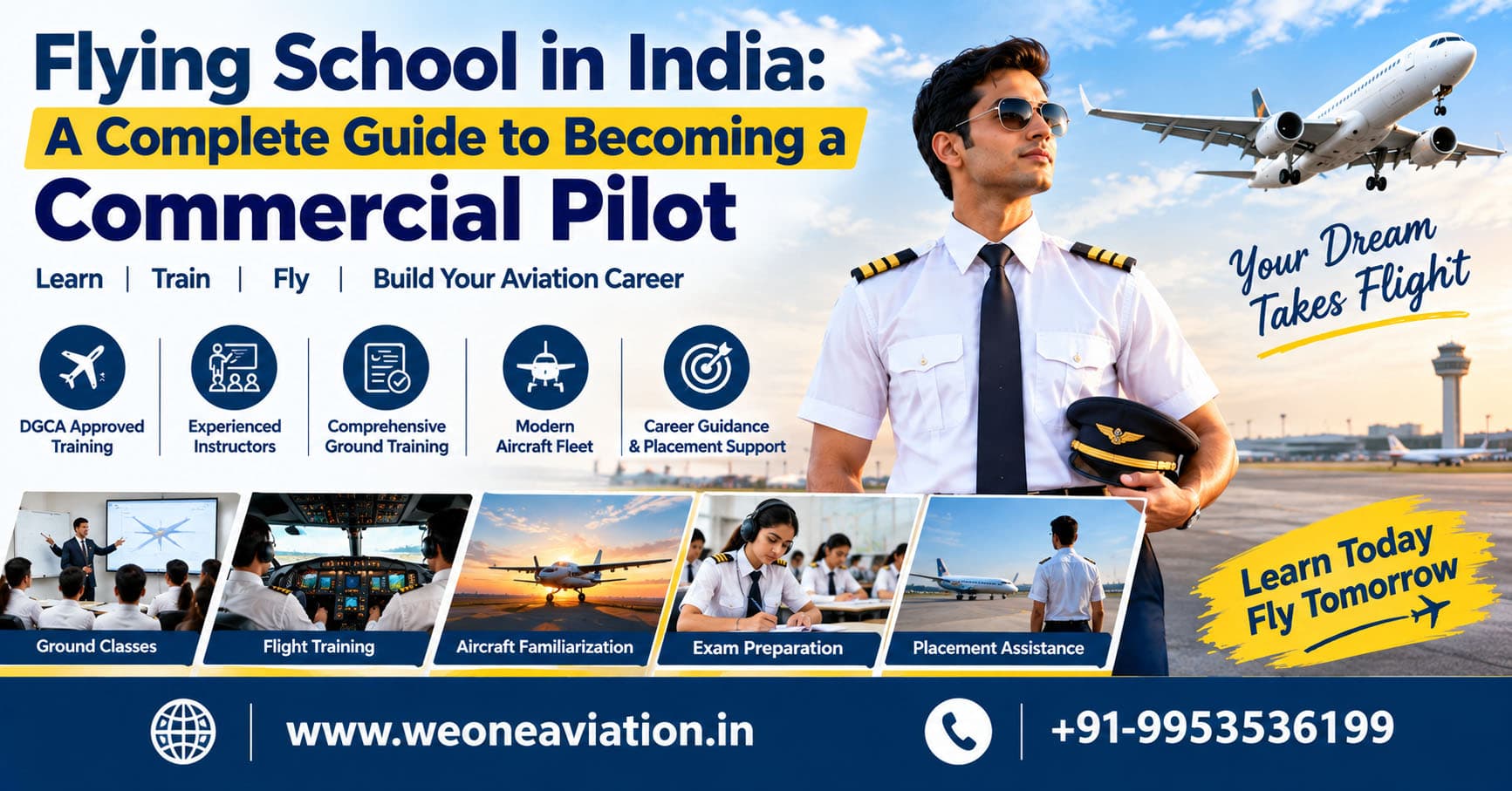
Flying School in India: Your First Step towards a Successful Aviation Career
The aviation industry in India is growing rapidly, creating exciting career opportunities for aspiring pilots. With increasing air travel, expanding airline fleets, and the introduction of new regional and international routes, the demand for skilled commercial pilots continues to rise. Choosing the right flying school in India is one of the most important decisions you will make on your journey to becoming a professional pilot.
A reputable flying school provides high-quality flight training, experienced instructors, modern aircraft, and comprehensive guidance to help students earn their Commercial Pilot Licence (CPL). Combined with strong DGCA ground training and practical flying experience, the right academy prepares students for successful careers in the aviation industry.
This guide explains everything you need to know about flying schools in India, including eligibility, training, career opportunities, and tips for selecting the best academy.
What is a Flying School?
A flying school is an aviation training institution that provides theoretical and practical education to students who wish to become licensed pilots. These schools conduct flight training according to the standards established by the Directorate General of Civil Aviation (DGCA).
Students receive instruction in:
- Aircraft operation
- Flight safety
- Air navigation
- Aviation meteorology
- Air regulations
- Radio communication
- Emergency procedures
- Aircraft handling
The goal is to develop the knowledge, skills, and confidence required to operate aircraft safely and professionally.
Why Choose a Flying School in India?
India has become a preferred destination for pilot training because of its growing aviation sector and expanding demand for commercial pilots.
Benefits of studying at a flying school in India include:
- DGCA-approved training programs
- Experienced flight instructors
- Modern training aircraft
- Well-equipped classrooms
- Structured CPL programs
- Affordable training compared to many international options
- Strong career opportunities with Indian airlines
- Exposure to diverse weather and flying conditions
These advantages help students build practical flying skills while meeting national licensing requirements.
Eligibility for Flying School Admission
To enroll in a Commercial Pilot Licence program, candidates generally need to meet the following requirements:
- Minimum age of 17 years for student pilot training
- Completion of 10+2 with Physics and Mathematics (or an equivalent qualification accepted under DGCA regulations)
- Valid DGCA Class II Medical Certificate, followed by Class I Medical clearance
- Good English communication skills
- A passion for aviation and a commitment to professional training
Prospective students should always verify the latest DGCA eligibility requirements before applying.
Commercial Pilot Licence (CPL) Training
A CPL program combines classroom learning with practical flight training.
Ground Training
Ground school prepares students in subjects such as:
- Air Navigation
- Aviation Meteorology
- Air Regulations
- Technical General
- Technical Specific (where applicable)
- Radio Telephony (RTR) preparation
A strong theoretical foundation is essential for both DGCA examinations and safe flight operations.
Flight Training
Practical training typically includes:
- Aircraft familiarization
- Pre-flight inspections
- Taxiing
- Take-off and landing
- Circuit training
- Solo flying
- Cross-country navigation
- Night flying
- Instrument flying
- Emergency procedures
Students gradually build confidence under the supervision of qualified flight instructors.
Course Duration
The duration of pilot training depends on aircraft availability, weather conditions, and the student's progress.
Typical timelines are:
- DGCA Ground Classes: 4–6 months
- Flight Training: 12–18 months
- CPL Completion: Approximately 18–24 months
Consistent attendance and regular flying help students complete the program more efficiently.
Skills Developed During Training
A quality flying school helps students develop essential aviation skills, including:
- Aircraft handling
- Flight planning
- Navigation
- Decision-making
- Situational awareness
- Radio communication
- Crew Resource Management (CRM)
- Aviation safety practices
- Professional discipline
These skills prepare graduates for airline operations and other aviation careers.
How to Choose the Best Flying School in India
Selecting the right academy is crucial for your success. Consider the following factors before making a decision:
DGCA Compliance
Choose a school that follows DGCA training standards and maintains a strong reputation for quality education.
Experienced Instructors
Qualified instructors with real-world flying experience can provide valuable practical knowledge and mentorship.
Modern Aircraft Fleet
A well-maintained fleet and access to aircraft reduce training delays and improve learning.
Infrastructure
Look for:
- Smart classrooms
- Flight briefing rooms
- Computer-based learning
- Flight simulators (where available)
- Student support services
Student Success Record
Research the school's training outcomes, student reviews, and CPL completion rates.
Career Guidance
Institutes that offer interview preparation, resume guidance, and career counseling provide additional value to aspiring pilots.
Career Opportunities After CPL
After earning a Commercial Pilot Licence, graduates can pursue careers in various aviation sectors, including:
- Airline First Officer
- Commercial Pilot
- Charter Pilot
- Cargo Pilot
- Corporate Pilot
- Flight Instructor
- Air Ambulance Pilot
- Government Aviation Services
- Aerial Survey Operations
- Aviation Operations and Management
As flying experience increases, pilots may progress to Captain and senior airline leadership positions.
Benefits of Professional Flight Training
Professional training offers numerous long-term advantages:
- Structured learning environment
- Experienced mentorship
- Strong aviation foundation
- Safe flying practices
- Better exam preparation
- Enhanced confidence
- Improved employability
- Opportunities for career advancement
Quality training is an investment that supports a successful and rewarding aviation career.
Tips for Aspiring Pilots
To maximize your chances of success:
- Attend all ground classes regularly.
- Stay disciplined with your study schedule.
- Practice navigation and meteorology concepts consistently.
- Maintain physical fitness and meet medical standards.
- Improve English communication skills.
- Learn from instructor feedback.
- Build strong decision-making and teamwork skills.
- Stay updated with DGCA regulations and aviation industry developments.
Dedication and continuous learning are essential traits for every professional pilot.
Why Flying Schools Are Important
A flying school provides much more than flight hours. It develops technical competence, professionalism, safety awareness, and confidence. Students learn to make sound decisions, communicate effectively, and handle challenging situations calmly—qualities that airlines expect from future pilots.
Choosing a reputable flying school with experienced faculty and a student-focused approach lays a strong foundation for long-term success in the aviation industry.
Conclusion
Choosing the right flying school in India is the first major step toward achieving your dream of becoming a commercial pilot. A quality flying academy offers comprehensive ground training, practical flight instruction, experienced mentors, and career guidance to help students meet DGCA requirements and build a successful aviation career.
By selecting a trusted training institute, staying committed to your studies, and continuously improving your flying skills, you can confidently move toward earning your Commercial Pilot Licence and pursuing exciting opportunities with airlines and other aviation organizations.
Ready to Start Your Pilot Journey?
Get free expert guidance from our airline pilot mentors.
📱 Talk to an Expert on WhatsApp