DGCA guide
Bharatiya Vayuyan Adhiniyam, 2024: What It Changes (and Does Not) for Pilot Licensing in India
By We One Aviation Academy · Published · 8 min read
Last updated:
Quick Answer
Does the Bharatiya Vayuyan Adhiniyam, 2024 change pilot licence eligibility in India?
No. The Bharatiya Vayuyan Adhiniyam, 2024 replaced the Aircraft Act, 1934 from 1 January 2025, but section 43(2) keeps every rule made under the old Act in force — including the Aircraft Rules, 1937 that set CPL age, education and the 200-hour requirement. The one real change: RTR(A) licensing now sits with DGCA, not the Wireless Planning and Coordination Wing.
What changed, in one view
- •The Aircraft Act, 1934 was repealed and replaced by the Bharatiya Vayuyan Adhiniyam, 2024 (Act No. 16 of 2024), in force from 1 January 2025
- •Section 43(2) of the new Act keeps every rule made under the old one in force — the repeal did not create a gap
- •The Aircraft Rules, 1937, Schedule II — licence ages, the CPL education requirement and the 200-hour table — continue exactly as before
- •SPL, PPL, CPL and ATPL minimum ages (16, 17, 18 and 21) are unaffected
- •RTR (A) now sits under the Radio Telephone Operator (Restricted) Certificate and Licence Rules, 2025, administered by DGCA rather than the old wireless-licensing framework
- •DGCA remains the licensing and examination authority for every other written paper, medical and computer number process
What is the Bharatiya Vayuyan Adhiniyam, 2024?
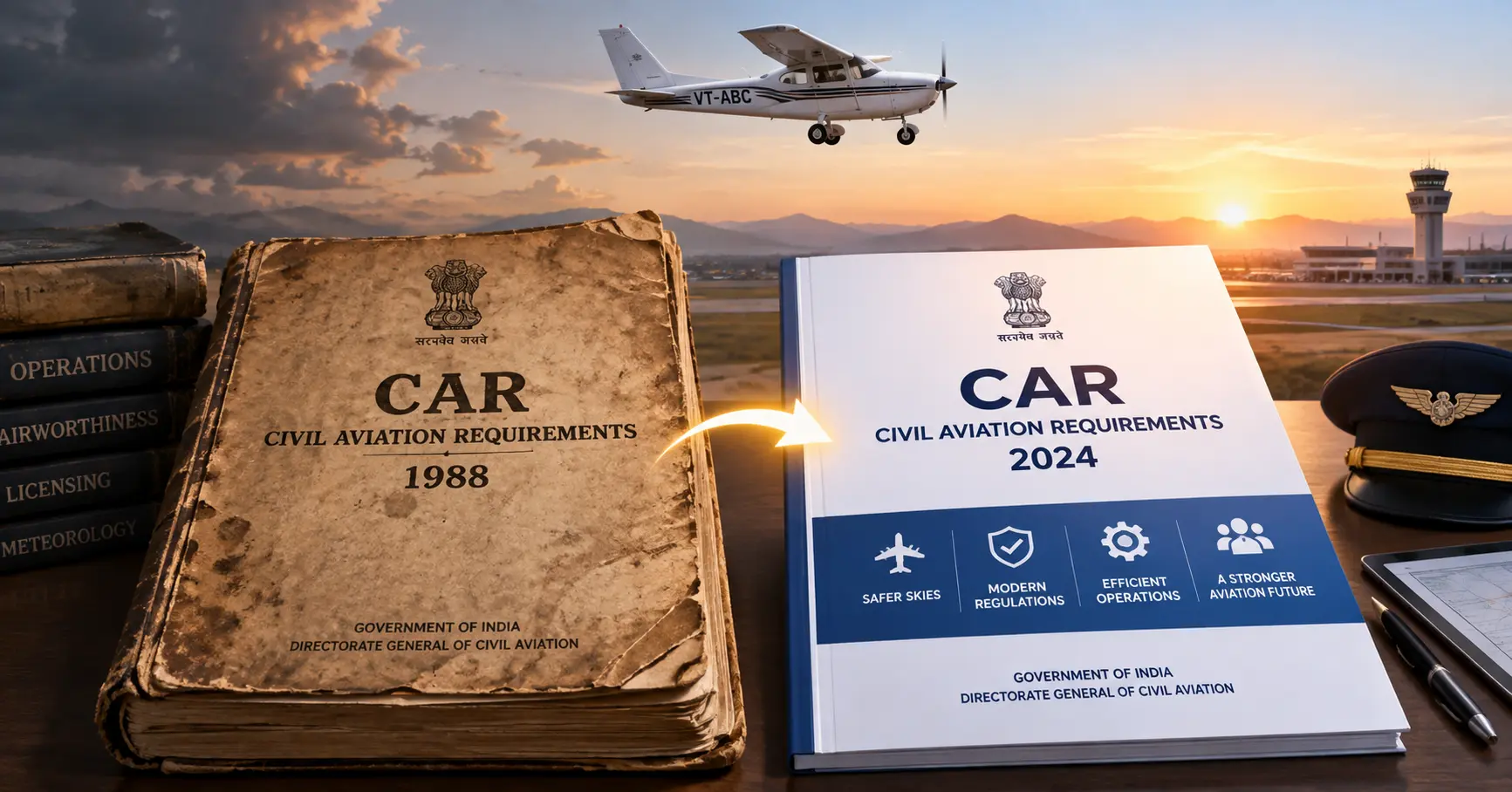
It is the statute that now governs civil aviation in India — aircraft, aerodromes, air navigation and the licensing of the people who fly and maintain aircraft. Parliament passed it as Act No. 16 of 2024, and it took effect nationally on 1 January 2025, replacing the Aircraft Act, 1934, which had been the governing law for more than nine decades. The full text is published on India Code, the Government of India’s statute repository.
If you are researching pilot training right now, the reason this matters is simple: almost every page on this subject, this one included until this week, cited “the Aircraft Act, 1934” as the governing law. That citation is now technically out of date. Whether the substance behind it is out of date is a separate question, and it is the one this page actually answers.
Did it replace the Aircraft Act, 1934, and when?
Yes, in full. The new Act repeals the old one outright. What it does not do is leave a gap where the old Act’s rules used to sit — and that distinction is the whole story for a prospective pilot.
| Aspect | Aircraft Act, 1934 | Bharatiya Vayuyan Adhiniyam, 2024 |
|---|---|---|
| Short title | The Aircraft Act, 1934 | The Bharatiya Vayuyan Adhiniyam, 2024 (Act No. 16 of 2024) |
| Status today | Repealed | In force |
| In force from | 1934 | 1 January 2025 |
| Rules made under the old Act — e.g. the Aircraft Rules, 1937 | Aircraft Rules, 1937, Schedule II set licence ages, education and the 200-hour CPL table | The same Schedule II, continued in force by section 43(2) of the 2024 Act — not rewritten, not renumbered |
| RTR(A) radio licence | Examined under the older wireless-licensing framework, administered outside DGCA | Examined under the Radio Telephone Operator (Restricted) Certificate and Licence Rules, 2025, made under the 2024 Act and administered by DGCA |
The mechanism that keeps the old rules alive sits in the new Act itself: section 43 repeals the 1934 Act, and section 43(2) separately saves anything already done, or any rule, regulation or notification already made, under it — unless a specific provision conflicts with the new Act. In plain terms: the parent statute changed name and number; the rulebook made under it, including the one that actually sets licence requirements, did not.
Does this change your CPL, PPL, SPL or ATPL eligibility?
No. The document that sets minimum age, the education requirement and the flying-hour table for every licence is the Aircraft Rules, 1937 — specifically Schedule II. That Schedule was not rewritten, renumbered or amended by the 2024 Act. It continues in force, word for word, under the section 43(2) savings clause above.
| Licence | Minimum age | Effect of the 2024 Act |
|---|---|---|
| SPL — Student Pilot Licence | 16 | Unaffected — set by Aircraft Rules, 1937, Schedule II, continued in force by s.43(2) |
| PPL — Private Pilot Licence | 17 | Unaffected — set by Aircraft Rules, 1937, Schedule II, continued in force by s.43(2) |
| CPL — Commercial Pilot Licence | 18 | Unaffected — set by Aircraft Rules, 1937, Schedule II, continued in force by s.43(2) |
| ATPL — Airline Transport Pilot Licence | 21 | Unaffected — set by Aircraft Rules, 1937, Schedule II, continued in force by s.43(2) |
The same holds for the 200-hour CPL table and every component inside it — the pilot-in-command time, the cross-country flight, the instrument hours and the night flying — and for the education requirement at 10+2 level. None of it moved. A school, a citation or a page that still names “the Aircraft Act, 1934” as the source of these numbers is using an outdated statute name for figures that are, substantively, still correct — which is a citation problem, not an eligibility problem.
What actually changed: the RTR (A) radio licence
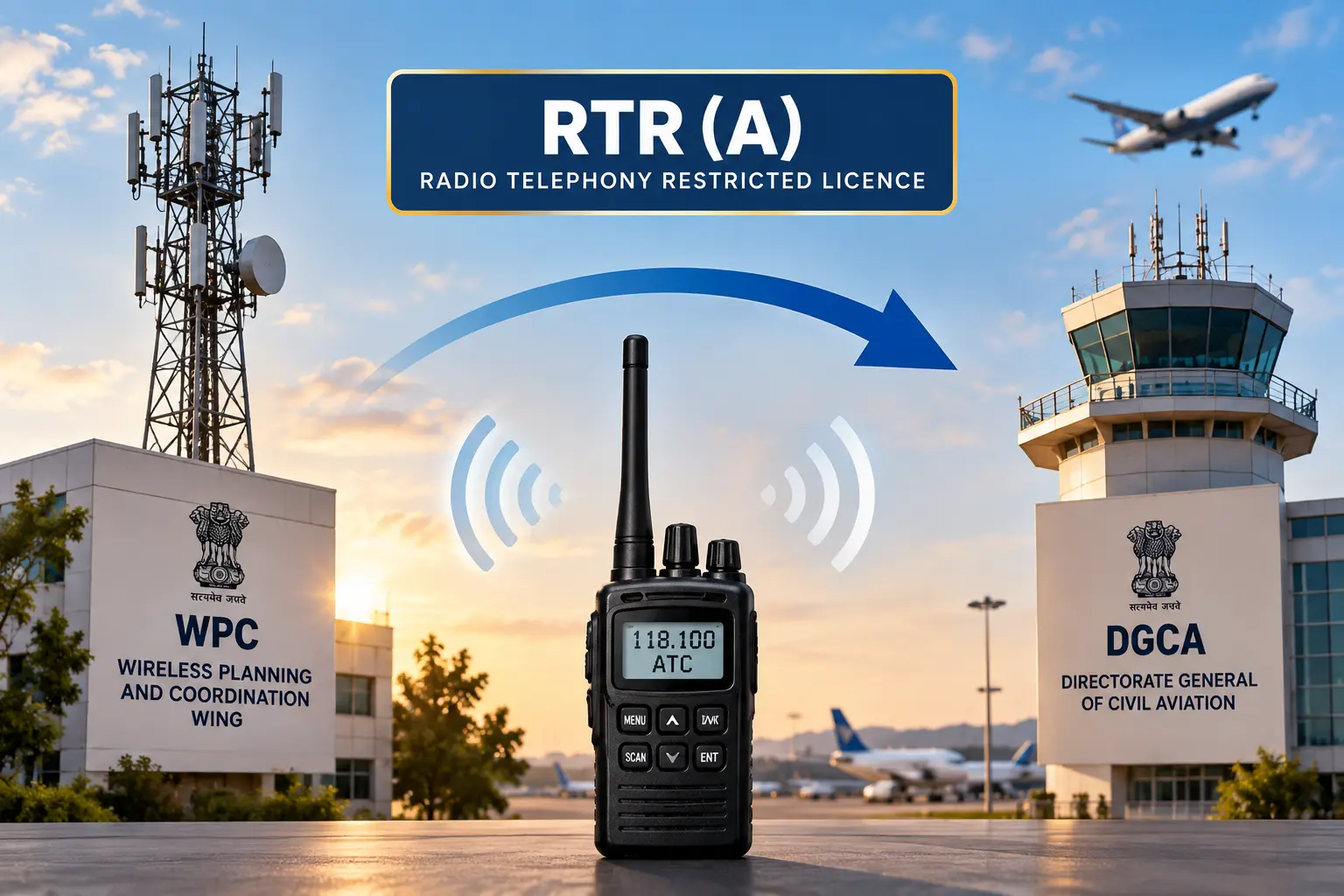
One licensing change is real, and it belongs to RTR (A), not to the pilot licence itself. Examined separately from the DGCA written papers, and required for CPL issue under Section J paragraph 1(g). Radio telephony examination and certification used to sit outside DGCA entirely, administered under India’s general wireless-licensing framework. Under the 2024 Act, it moved.
| Aspect | Before | Now |
|---|---|---|
| Governing instrument | The older wireless-licensing rules for aeronautical radio telephony | Radio Telephone Operator (Restricted) Certificate and Licence Rules, 2025 |
| Administering authority | Outside DGCA, under the wireless-licensing framework | DGCA |
| Relationship to the DGCA written papers | Examined separately from the CPL papers | Still examined separately — RTR (A) is not one of the five CPL papers |
For a student, the practical effect is administrative rather than substantive: RTR (A) is now one more DGCA-administered process alongside the computer number and the five written papers, rather than a separate government department’s process bolted onto the CPL path. It is still examined separately from those five papers — that has not changed.
Is DGCA still the regulator?
Yes, unchanged. The Directorate General of Civil Aviation remains the licensing and safety oversight authority for pilots, aircraft and flying training organisations, under the Ministry of Civil Aviation. The 2024 Act replaced the parent statute some of DGCA’s rule-making sits under; it did not create a new regulator, transfer licensing to a different body, or change who issues a Commercial Pilot Licence.
What this means if you are starting training now
Nothing on your side changes. The computer number application, the DGCA medical assessment, the five written papers and their pass mark, and the flying-hour requirements all continue exactly as they were before 1 January 2025. There is no new form created by this Act, no re-registration it requires of anyone already in training, and no reason to redo a step you have already completed.
What is worth doing is treating the Act as a reason to double-check any source — a school’s website, a forum post, a PDF you downloaded two years ago — that states a licence requirement without saying where it comes from. Not because the numbers are likely to be wrong, but because a source that cannot name the Aircraft Rules, 1937, Schedule II, or say which section of it applies, was probably never checked against the regulation in the first place. The Act being new is a good prompt to ask that question; it is not, on its own, a reason to expect a different answer.
Full text of the Act is available on India Code, the Government of India’s official statute repository, for anyone who wants to read the savings clause directly rather than take a summary’s word for it.
Ground classes at We One Aviation
We have taught the DGCA ground subjects from Dwarka since 2009, against the same Aircraft Rules, 1937 this page describes — before and after the 2024 Act changed which statute keeps them in force. If a document you have been quoted a requirement from does not name its source, that is worth asking about before you rely on it.
We teach the DGCA ground subjects and arrange flight training with partner flying schools. We do not own aircraft or simulators, we do not employ pilots, and we do not place students into airline jobs — hiring decisions rest with the operator.
People also ask
Is the Aircraft Act, 1934 still valid in India?
No. It was repealed with effect from 1 January 2025, when the Bharatiya Vayuyan Adhiniyam, 2024 came into force. But its repeal does not empty out the rules made under it — section 43(2) of the new Act specifically keeps them in force, which is why the Aircraft Rules, 1937 are still the operative text for licence ages, education and flying-hour requirements.
Do I need a new licence or a new application because of the Bharatiya Vayuyan Adhiniyam?
No. The Act changed which statute the rules sit under, not the rules themselves or the process for getting a licence under them. A computer number, a DGCA medical assessment and a licence application go through exactly the same portals and forms as before.
Did the CPL 200-hour requirement or the age limits change under the new Act?
No. 200 hours, and the age of 18 for a Commercial Pilot Licence, come from the Aircraft Rules, 1937, Schedule II — and that Schedule was not rewritten. It continues in force exactly as it stood, under section 43(2) of the 2024 Act.
Who examines the RTR(A) radio licence now?
DGCA. Examined separately from the DGCA written papers, and required for CPL issue under Section J paragraph 1(g). That is the one genuine licensing change the 2024 Act brought for a prospective pilot — everything else about eligibility and the flying-hour table is unchanged.
Did DGCA get replaced or restructured by the Bharatiya Vayuyan Adhiniyam?
No. DGCA remains the licensing and safety-oversight authority under the Ministry of Civil Aviation. The 2024 Act changed the statute some of its rule-making sits under; it did not create a new regulator or move pilot licensing to a different body.
Related guides
- For the full licence ladder and how Schedule II sets each stage, read our complete guide to pilot training
- For how a Commercial and an Airline Transport licence differ under the same Schedule, see our CPL vs ATPL guide
- The computer number process this Act left untouched is covered step by step in the flight school prerequisites guide
- The six-month ground-school syllabus and current batch terms are on the DGCA ground classes page
- For what a Commercial Pilot Licence itself requires, see the CPL course page