
Pilot licence guide
CPL vs ATPL: What's the Difference and Which Licence Do You Need?
By We One Aviation Academy · Published · 8 min read
Last updated:
Quick Answer
What is the difference between a CPL and an ATPL?
A Commercial Pilot Licence (minimum age 18) is what qualifies you to be paid to fly and is the licence almost every airline pilot starts with. An Airline Transport Pilot Licence (minimum age 21) is required to act as pilot-in-command of a commercial aeroplane. You cannot go straight to an ATPL — it sits after a CPL and the command experience built while holding one.
CPL vs ATPL, in one view
- •CPL: minimum age 18, Section J — qualifies you to fly for payment
- •ATPL: minimum age 21, Section M — required to act as pilot-in-command
- •An ATPL is not a hiring requirement — most pilots are hired as First Officers on a CPL alone
- •CPL flying experience: 200 hours total, within 5 years of applying
- •ATPL experience figures were amended twice (2020, 2023) — confirm the current Section M table rather than trusting an older number
- •Both licences require a current DGCA medical certificate under the same fitness framework
- •Neither licence guarantees a job or a command seat — airlines run their own hiring and upgrade criteria on top of the DGCA minimum
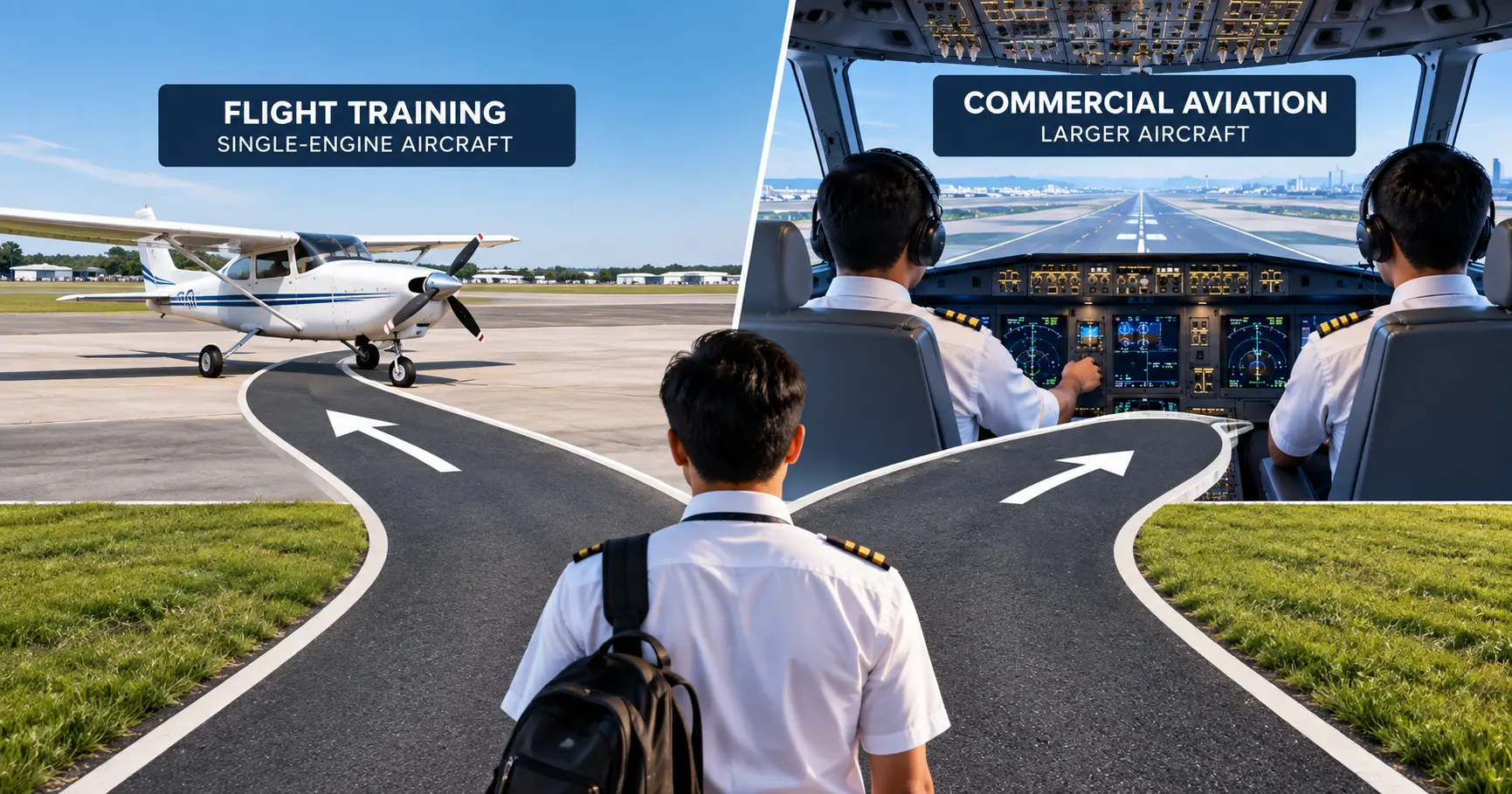
What is a CPL?
A Commercial Pilot Licence is the licence that qualifies a pilot to be paid to fly. It is issued under Section J of Schedule II to the Aircraft Rules, 1937, at a minimum age of 18, and it requires 200 hours of flight time within the 5 years before you apply. For almost every Indian pilot, it is the first professional licence they hold, and the one an airline actually looks at when it hires a fresh candidate.
A CPL does not, by itself, make you employable on every aircraft. It is the base licence a First Officer holds; the specific aircraft, the multi-crew procedures and the command authority to act without supervision are layered on separately, by the operator and, later, by an ATPL.
What is an ATPL?
An Airline Transport Pilot Licence is the licence required to act as pilot-in-command of a commercial aeroplane. It is issued under Section M of the same Schedule, at a minimum age of 21, and it assumes the holder already has a CPL and has been accumulating command experience toward it. The ATPL experience table in Schedule II, Section M was amended by G.S.R. 22(E) of 7 January 2020 and again by G.S.R. 731(E) of 10 October 2023. Any hours figure quoted from an older source may be out of date — confirm against the current notified Schedule before planning around it.
In practice, an ATPL is not a first licence at all. It is the credential that turns a First Officer into someone eligible for the left seat, and pilots typically clear its written papers while already flying the line, rather than before starting a career.
CPL vs ATPL at a glance
The two licences sit on the same ladder rather than as alternatives — but the table below is the fastest way to see exactly where they diverge.
| Field | CPL | ATPL |
|---|---|---|
| Full name | Commercial Pilot Licence | Airline Transport Pilot Licence |
| Minimum age | 18 years | 21 years |
| Governing section | Aircraft Rules, 1937, Schedule II, Section J | Aircraft Rules, 1937, Schedule II, Section M |
| Typical prerequisite | Class 10+2 with Physics and Mathematics from a recognised Board or University, plus SPL/PPL flying | A current CPL and command experience toward the Section M table |
| Flying experience | 200 hours total, within 5 years of applying | Set by Schedule II, Section M — amended twice since 2018; confirm the current table |
| What it permits | Flying for payment. Requires 200 hours of flight time. | Acting as pilot-in-command of a commercial aeroplane. |
| When most pilots hold it | First, straight after ground school and flight training | Later, usually while already flying the line as a First Officer |
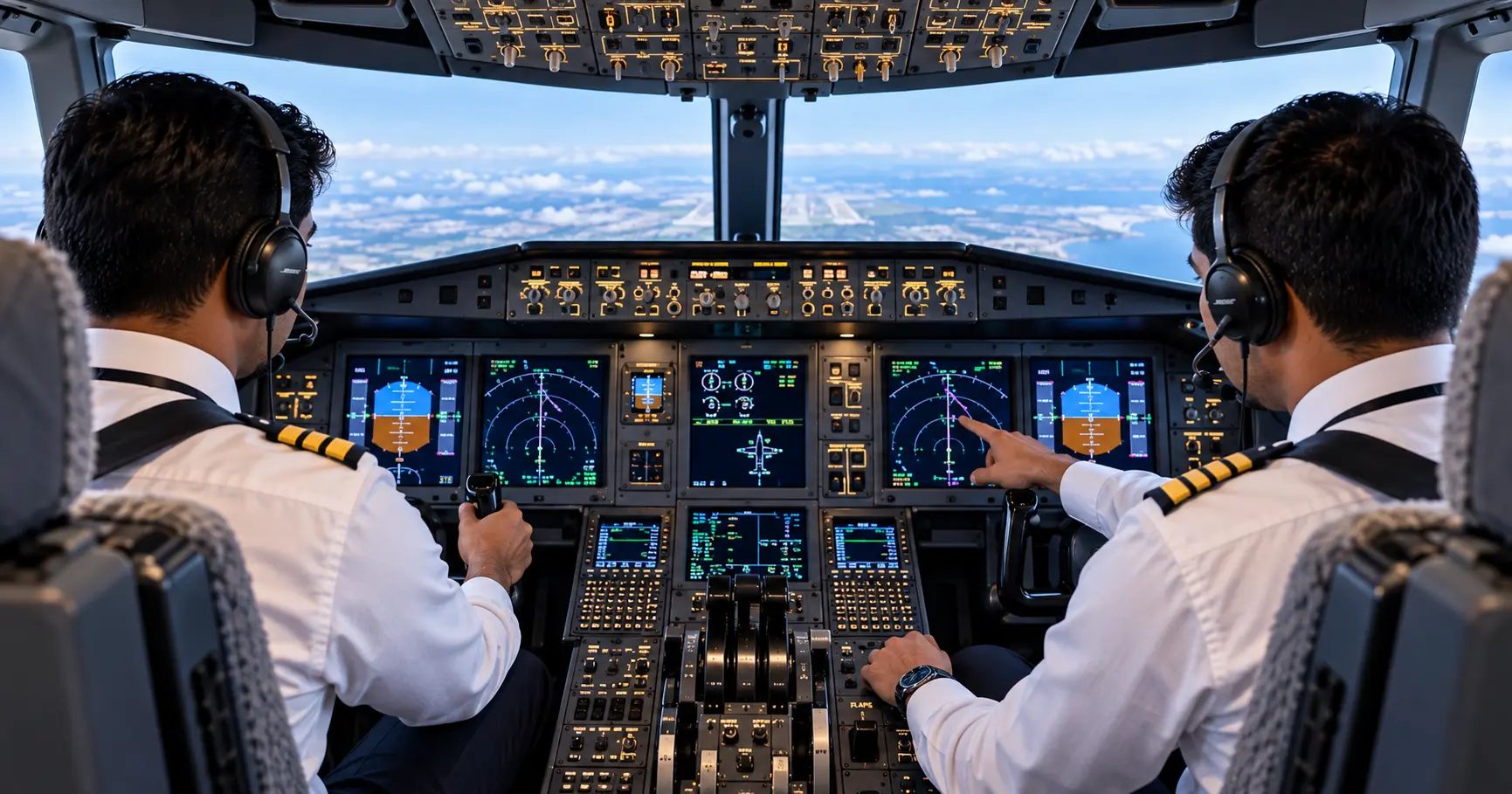
What each licence actually lets you do
This is the distinction most confusion comes from. A CPL permits flying for payment. requires 200 hours of flight time. An ATPL permits acting as pilot-in-command of a commercial aeroplane.
Read those two sentences again, because the difference is not “bigger aircraft” or “better licence” — it is specifically about command. A CPL holder can be a paid crew member on a commercial aeroplane, including a large airliner, provided the operator has trained and rostered them for that role. What a CPL alone does not give you is the authority to act as the pilot-in-command of that flight. That authority is what an ATPL adds.
Why you cannot skip straight to an ATPL
Section M sets the minimum age for ATPL issue at 21, three years above the CPL minimum of 18. That gap is not incidental — the section is written around a candidate who is already exercising CPL privileges and logging the command experience the ATPL experience table requires. There is no route into the Rules that lets someone apply for an ATPL without first holding a CPL and building time on it.
In practice this means the two licences are stages, not choices. A student does not decide between CPL and ATPL training the way they might choose between two flying schools — they train for a CPL first, fly on it, and apply for an ATPL once age and experience allow.
What CPL and ATPL have in common
Both licences sit inside the same regulatory framework and share more than the comparison table above might suggest.
- Both require DGCA-mandated medical fitness assessment to be current at the time of application, under Section J, para 1(c) — a certificate of physical fitness from an approved Medical Board. Neither Schedule II section defines a separate medical category for one licence versus the other.
- Both assume the same educational starting point — Class 10+2 with Physics and Mathematics from a recognised Board or University — since the ATPL candidate has already cleared that bar to hold the CPL in the first place.
- Neither licence is issued by, or through, a ground school. DGCA issues both after its own examinations and experience checks; a training provider prepares candidates for the written papers and, for the flying, works through partner flying schools.
- Neither is a guarantee of employment or command. Airlines run their own selection process on top of whichever licence a candidate holds.
Common misconceptions
- “I need an ATPL to get hired by an airline.” Most direct-entry First Officer roles are filled with CPL holders. An ATPL becomes relevant later, at the command-eligibility stage, not at the hiring stage.
- “ATPL is just a harder version of the CPL exam.” The subjects differ in scope — long-range navigation, jet meteorology and transport-category performance replace their lighter CPL equivalents — but ATPL theory is usually approached with real line experience already behind the candidate, which changes how it is studied.
- “Getting an ATPL makes me a captain.” It makes you eligible to be considered for command. The operator’s own upgrade criteria — fleet size, seniority, route structure — decide who actually moves into the left seat and when.
- “The flying hours requirement is the same for both.” It is not. The CPL figure is fixed at 200 hours under Section J, para 1(e). The ATPL experience table in Section M has been amended twice since 2018, so any number quoted for it from an older source may already be wrong.
Ground classes at We One Aviation
We have taught the DGCA ground subjects from Dwarka since 2009, and that includes preparation for both the CPL papers and, later in a pilot’s career, ATPL theory. Most students we see are working out where they stand on the CPL side of this comparison — whether their education route, medical and timeline line up — and that is exactly the conversation worth having before enrolling anywhere.
We teach the DGCA ground subjects and arrange flight training with partner flying schools. We do not own aircraft or simulators, we do not employ pilots, and we do not place students into airline jobs — hiring decisions rest with the operator.
People also ask
Can I get an airline job with only a CPL?
Yes. A CPL is what qualifies you to be paid to fly, and it is the licence most pilots hold when an airline first hires them, usually as a First Officer under that operator's own training and type rating process. An ATPL is not a hiring prerequisite — it becomes relevant later, when you are eligible to act as pilot-in-command.
Is the ATPL exam harder than the CPL exam?
The subject matter is more advanced — long-range navigation, jet meteorology and transport-category performance replace the CPL syllabus's lighter-aircraft equivalents — but most candidates sit ATPL theory after they already hold a CPL and are flying the line, so the papers are usually tackled with real operational experience behind them rather than cold.
Can I go straight for an ATPL and skip the CPL?
No. Aircraft Rules, 1937, Schedule II sets Section M at a minimum age of 21 and assumes a candidate is already building command experience — which in practice means already holding a CPL. There is no direct route to an ATPL that bypasses it.
Does an ATPL guarantee a captain position?
No. The licence is a regulatory requirement for command, not an appointment to it. Airlines set their own upgrade criteria on top of the DGCA minimum — fleet size, seniority and route structure all move that bar, and holding an ATPL only means you are eligible to be considered.
Do CPL and ATPL require separate DGCA medicals?
Both licences require DGCA medical certificate to be current, under the same medical-fitness framework. There is no separate ATPL-specific medical category defined in the Rules; what changes between the two licences is the age and experience requirement, not the medical standard.
Related guides
- For the full licence ladder from SPL through to ATPL, and how PPL and CPL differ, read our complete guide to pilot training
- A type rating sits on top of either licence and is aircraft-specific — the full process is on our type rating guide
- For the roadmap from Class 12 to a first airline seat, see our airline pilot career guide
- CPL eligibility, ground subjects and the six-month syllabus are on the CPL course page
- ATPL prerequisites, ground subjects and where it sits after a CPL are on the ATPL course page